

From Anderlecht to Stellenbosch: Henri Stanic’s Journey

Henri Stanic has charted his journey from Anderlecht’s famed Neerpede Academy to the PSL, where he now features as a regular in the heart of Stellenbosch FC’s defence.
Born in Brussels to a Congolese mother and a Togolese father, Stanic is one of three siblings and a first-generation athlete in his family, although his journey to becoming a professional footballer has not always been straightforward.
“I was a very active child when I was young so to calm me down my mom got me to play sport, and I was about three years old when I played football for the first time,” he shares.
“I continued playing but there came a period where I was training twice a week and playing matches, but my parents couldn’t always drive me there because they were working, and I was too young to make the hour-long walk from Liedekerke.
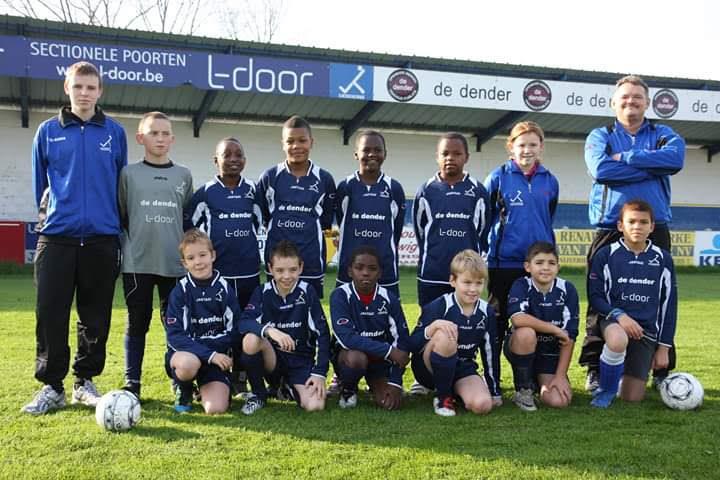
“When I told my coach, Johan van Laere, he said he saw something in me and that I had the talent to one day make it as a footballer, so he came and fetched me every day for training and games. That was a big help for my parents and me. For three years he did that.”
Van Laere evidently had a good eye for talent as Stanic soon made the step up from his local team after being scouted and recruited into the academy of Belgian giants Anderlecht.
“We played a game against Anderlecht and after the match I went to talk with one of their coaches,” he explains. “I don’t know where the courage came from, but I told him I wanted to play for them, they invited me for a trial, and just like that I ended up at the club.
Feature: Sage Stephens breaks all-time Stellenbosch FC appearance record
“Anderlecht’s academy has two levels – the Elite Level that plays across the country, and the B team that plays in Brussels. I initially joined the B team and was with them for a season-and-a-half before I got the call from the Elite team who had an injury crisis, and I never came back.”
Anderlecht upbringing and representing Belgium at youth level
Having established himself within the Neerpede system, Stanic played alongside the likes of Jérémy Doku – now of Manchester City in the Premier League – and soon earned international recognition when he was called up to the Belgium U-16 team at the age of 15 in 2017.
“We played a tournament with Anderlecht the year before, where we lost to Barcelona in the final, and there were a lot of scouts present, including the national team scouts,” he explains.
“From there, I got a call to play with ‘Generation ‘02’ which was a very nice experience, because I got to play with the best players in the country and at a very high level.
“I can’t describe the feeling of pulling on the Belgium jersey. I had to learn the national anthem before my debut, and I was so proud when I got to sing it. At the time, the country was doing very well at the World Cup and at the Euros, it was the ‘Golden Generation’, so to be part of that even at youth level was special.
“I was so proud to play for the badge and until today, I still have the dream to one day play for Belgium again.”
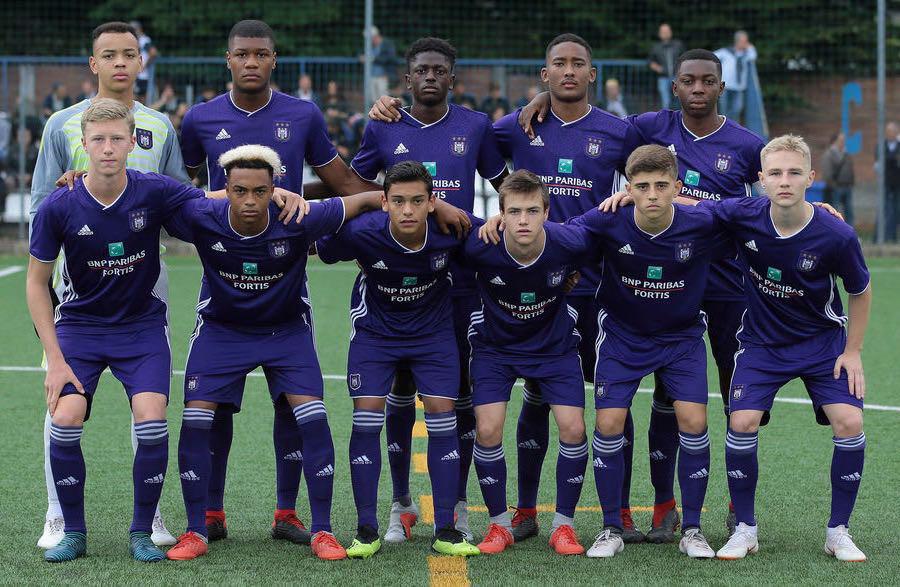
Despite enjoying relative success in the junior ranks, Stanic admits that he struggled with the enormity of Anderlecht and some of the pressures and expectations that come with playing for arguably the biggest club in Belgium.
“In Belgium, especially, when you play for Anderlecht, you become known, even at a young age. When I arrived, I was maybe a bit overawed because of how big the club was and the history behind it.
“When you walk in the training ground, you see Vincent Kompany and Romelu Lukaku on the walls, and that weighed on me. But, at the same time, I was very proud because no one believed that I could go from a small town to a big club like that.”
Taking the less traditional route
After leaving Anderlecht, Stanic joined fellow Belgian side OH Leuven for two years, before spending the next three seasons playing across Europe for FK Liepāja in Latvia, FK Jerv in Norway, and Balzan FC in Malta.
“The route was not what was planned in my head but sometimes you have to take a different path,” the 23-year-old says. “Before I went to Latvia, I was without a club for six months after leaving Leuven, but I still believed that I could make it as a footballer.
“I was already 20 at the time, but I believed, and I told my parents to give me six months to find something, otherwise I would try a different career. I didn’t want to study so in my head, if it was not football, I would have probably gone to the army. They liked my courage and supported me, and in the end, it worked out.”
Read | Mthetheleli Mthiyane named in preliminary Bafana Bafana squad
It was in Latvia with Liepāja where Stanic finally got his break, although it came in an unexpected fashion after he was initially asked to play as a centre-forward in the pre-season.
“All of our strikers were injured, and the coach wanted to try some things. He spoke Russian too, which I didn’t understand, so the assistant coach came to me later and told me they were going to play me as a striker in a friendly.
“I played and scored twice, then scored again in the next two matches, but I always wanted to play as a centre-back and convinced them to let me return to my position.”
Despite returning to his favoured defensive role, Stanic still managed to net an impressive six goals in 31 appearances for the club, before leaving at the end of the season to join Norwegian third division side Jerv.
“The move to Norway was good but – I wouldn’t call it a mistake in my career – it was a detour. In Latvia, I was playing in the first division, but in Norway I dropped down to the third division, and I could see that this level was not for me. It was maybe the first time that I had doubts about my football career and where I was going in life.
“Then came a move to Malta, which was top-flight again, and I gained a lot of my confidence back there. It was like a second chance for me that gave me the belief that I can do this.”
Stepping up at Stellenbosch FC
Stanic enjoyed an impressive season during his solitary campaign with Balzan in Malta, where he scored three times in 29 matches to help his side retain their top-flight status, and his performances caught the attention of Stellenbosch FC’s recruitment team.
“People sometimes ask me why am I in South Africa, but they don’t realise how high the standard is and how big Stellenbosch is as a club,” he says.
“A former coach of mine, who is now working for Genk, told me that I was joining a good club when I signed for Stellenbosch. I asked him how he knew about the team, and it turned out that they and other clubs in Belgium follow South African football closely and had watched Stellenbosch in the CAF Confederation Cup.

“I also see a lot in what Stellenbosch is doing that is similar to Anderlecht. When I spoke with the recruitment team, they explained to me how the Club and coaches work so closely with younger players, and how many of those players have gone to play internationally.
“At Anderlecht, there is a project called Purple Talent Project, and its target is that every player who comes through the academy should reach the first team. If not Anderlecht’s first team, then at least that they are prepared well enough to play for other teams in Belgium or other teams. I see a lot of similarities in that with what Stellenbosch has done.
“The standard of the facilities is also very close. I was very surprised when I arrived, because there are teams in Europe that don’t have these facilities, and I’m not just talking about the academy but the first teams also.
“The support you have around, and the cohesion between the different teams, is something you don’t see in the structures of some clubs in Europe. I know that all I have to do is focus on my performance on the pitch, and for everything else I can ask those around me for that support.”
Read | Notice of fixture change: Golden Arrows vs Stellenbosch FC
Stanic reveals that he has had to rely on those support structures, including the help of his teammates, as he came to grips with the speed of the domestic league and the transition period that Stellenbosch FC has found itself in this season.
“Stellenbosch is one of the biggest teams in South Africa,” he states. “Even though we don’t set targets, there is pressure that comes with the expectation, especially with the success of the last few seasons, because we want to keep that standard high.
“There are moments where I wasn’t sleeping well because we weren’t getting results, and in a way that’s good because we demand that standard, but I know the foundation is there for us to improve. We have the players and the experience to do it.
“I personally struggled initially with the level because the game is faster here and the players are quicker whereas if you compare it to Belgian football, Belgian football is more physical and, in some ways, more tactical.
“If you watch a game back home, you might think the game is slow, because teams are more tactical and structured, but here it is very open in comparison. I struggled with that to be honest, but I had to adapt my game to get used to it.
“Thabo Moloisane is someone who helped me a lot with this, on and off the pitch, and he’s also my neighbour at the Stellenbosch Academy of Sport so we talk a lot now. He taught me a lot about South African football and the history of the Club. That has given me even more perspective and pride when I defend the colours of the club.
“I am also close with one of the younger players, Dublin Boon, who arrived at the same time as me. He’s someone I spend a lot of time with away from football, and the one who is honest with me the most. If I play well, he will tell me, but if I play badly, he will also tell me even when I don’t want to listen to it, and I need that.
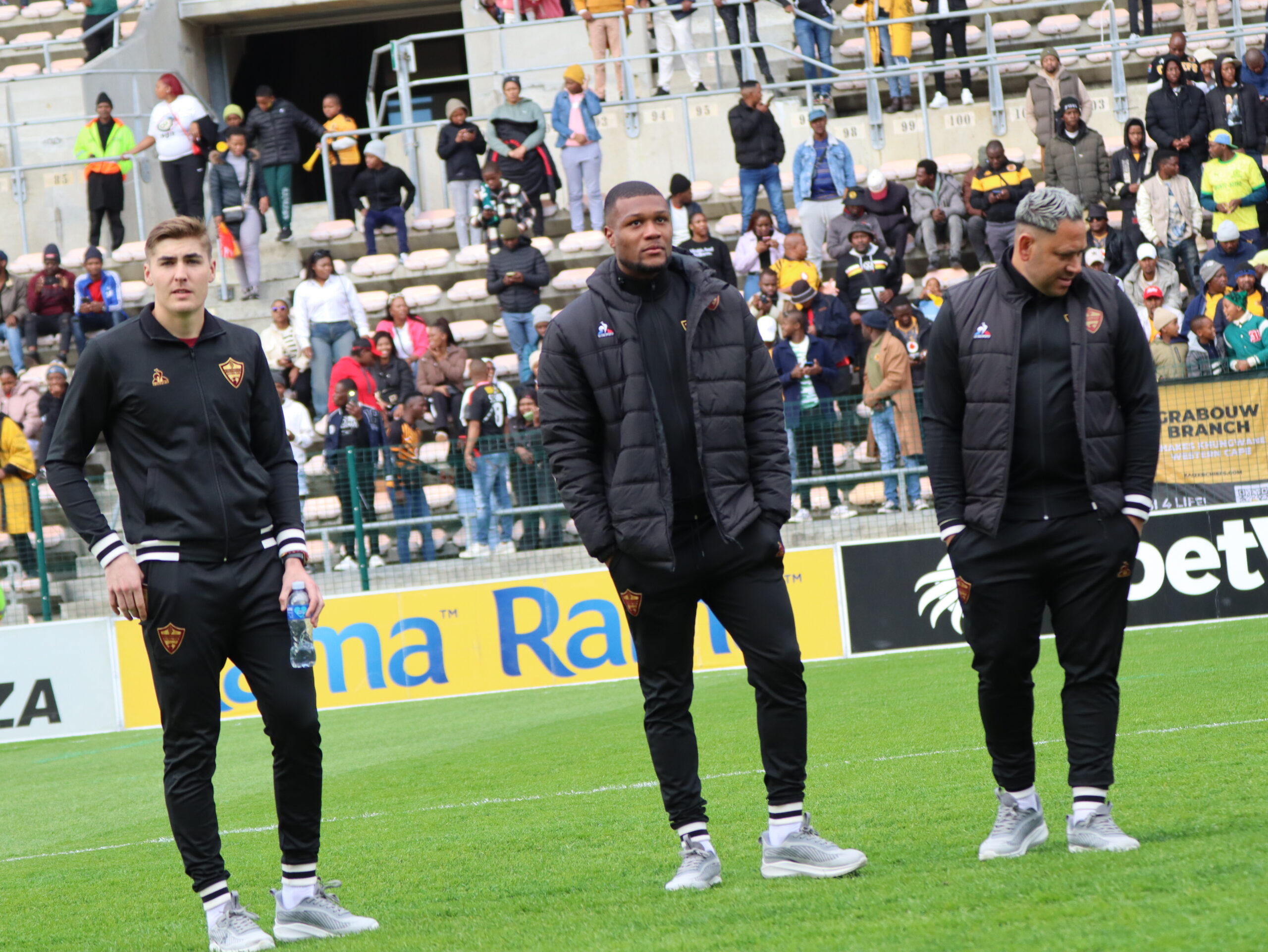
“I will always say that I am grateful for the opportunity to play for Stellenbosch. Since leaving the Anderlecht Academy, this is the first time in my professional career that I am playing for a big team, and I feel that this is a Club and an environment that will help to push me to the next level as a player.”